
- Home
- Art Movement
- Artist
- André Poirson (4)
- Anonymous (6)
- Bouquier (3)
- Claude Revardeau (2)
- Clery Pierpont (2)
- Contemporary (5)
- Courtine (2)
- Felicia Butel (2)
- Georges Guérin (2)
- Henri Royet (2)
- Illegible (2)
- Jean-paul Ulysse (18)
- Lucien Royer (3)
- Maurice Barle (3)
- Maurice Bismuth (2)
- Renoir (3)
- René Lévy (2)
- Siarnowski (3)
- Unknown (5)
- Unsigned (4)
- Other (5446)
- Features
- Genre
- Abstrait (59)
- Académisme (57)
- Art Deco (53)
- Art Déco (50)
- Barbizon (30)
- Baroque (91)
- Classicism (101)
- Classicisme (225)
- Expressionism (223)
- Expressionnisme (160)
- Fauvism (46)
- Fauvisme (53)
- Impressionism (243)
- Impressionnisme (497)
- Impressionniste (33)
- Orientalisme (74)
- Realism (74)
- Renaissance (29)
- Romantisme (116)
- Réalisme (204)
- Other (3103)
- Theme
- Abstract (8)
- Animals (32)
- Architecture (12)
- Character (92)
- Child (6)
- Figure (7)
- Flower, Tree (18)
- Flowers (3)
- Genre Scene (57)
- History, War (8)
- Horse Portrait. (2)
- Hunting, Fishing (8)
- Landscape (480)
- Marine (5)
- Nature, Landscapes (5)
- Portrait (16)
- Religion, Mythology (28)
- Seascape, Boat (82)
- Still Life (71)
- Windmills (2)
- Other (4579)
- Type
- Acrylique (4)
- Christianisme (5)
- Composition Mixte (2)
- Folk Art Object (2)
- Gouache (3)
- Huile (3292)
- Huile Sur Bois (20)
- Huile Sur Bois. (3)
- Huile Sur Panneau (15)
- Huile Sur Toile (4)
- Icon (2)
- Mural (5)
- Oil (1708)
- Oil On Canvas (2)
- Oil On Panel (2)
- Oil On Wood (5)
- Painting (9)
- Peinture (11)
- Other (427)
William Laparra painting on wood
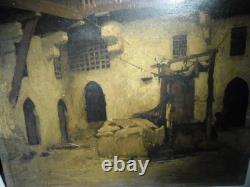
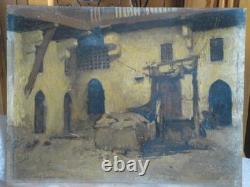
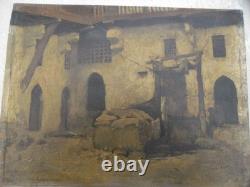
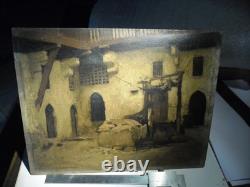
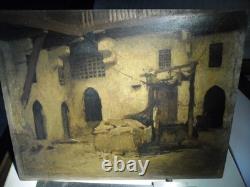
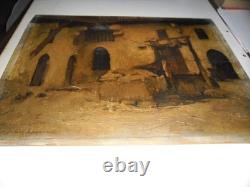
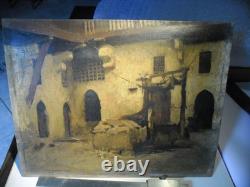
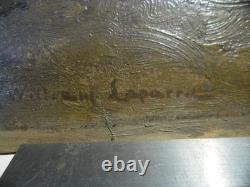
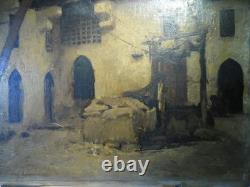
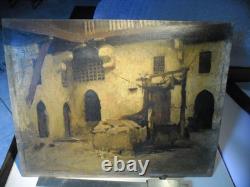
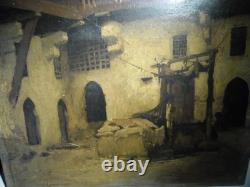
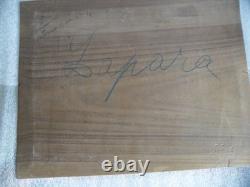
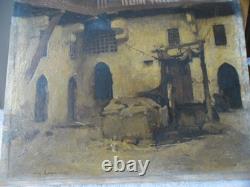
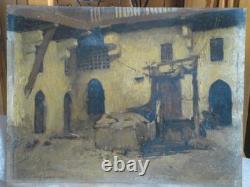
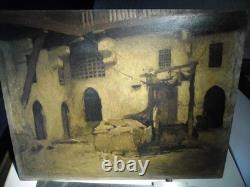
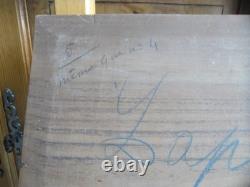
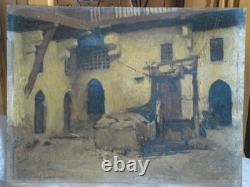

WILLIAM LAPARRA PAINTING on wood, original. In fair condition, needs restoration. There is a small crack in the wood. Dimensions: 36 cm x 28 cm. Marking on the back, probably information from the stock manager.
The appearance may vary depending on the lighting.
The painting has been subject to an online appraisal by DROUOT and another website. It may be viewed in the Nièvre department by appointment.
Born in Bordeaux in 1873, William Laparra entered the Bordeaux School of Drawing, then studied at the Académie Julian in Paris in 1892. He worked as a student with Bouguereau, Tony Robert-Fleury, and Jules Lefebvre.
He won the Prix de Rome at the age of 22 with his painting La Piscine de Bethsaïda1. He later settled in Boulogne-Billancourt.
He was acquainted with Landowski and Zuloaga, and exhibited several times, notably at the Salon des artistes français in 1914 with Le Bénédicité (now at the Musée d'Orsay)1. He was a professor at the Académie Julian.
A sensitive artist aware of the upheavals of his time, he donated one of his major works, Les Étapes de Jacques Bonhomme, to the Verrerie ouvrière d'Albi, the first workers' cooperative in France2.
His favorite subjects were harsh and wild landscapes, the poor, and scenes from everyday life. According to Schurr and Cabanne, he treated them in a dark, rigorous, and austere manner. He also painted portraits in a more appealing style1. He died in 1920 in Hecho, Aragon1.
He was married to Fanny Bertrand, daughter of the geologist Marcel Alexandre Bertrand and sister of the painter Claire Bertrand, who married the painter Willy Eisenschitz.
He was the brother of composer Raoul Laparra. His work has been the subject of several retrospective exhibitions, including one in Bordeaux in 1997.
More than one hundred of his works have been acquired by national museums.